
Active Reader / Passive Reader
Reading: sport or spectator activity?

Active Readers read books that are above them. They find a time and place where they can concentrate and go to work on the book. Passive Readers read a 15 minute Blinkist summary, or an audiobook while driving the car.
Active Readers enjoy the feeling of not understanding something. They try to find the arguments they don’t understand, they struggle and get frustrated, but ultimately come to terms with the argument and decide to agree or disagree. Passive readers take the book as a given, nod vigorously to the parts they already understand and assume everything the author writes is correct.
Active Readers are in an existential crisis every time they read a book. Passive Readers actually like reading.
Active Readers have burning questions in their head and they choose a book carefully to answer these burning questions. They learn about the author, the time it was written and what has influenced the author’s thoughts on the topic. Passive Readers dive straight in and hope for the best.
Active Readers summarize paragraphs, chapters and books in their own words. Passive Readers underline passages that are interesting to them and never think about them again.
Active Readers call books a text, or a work. Passive Readers call them books.
Active Readers pay attention to the structure of a book at a general level (title, subtitle, table of contents, headings, subheadings) and at a textual level (word choice, how a particular sentence fits in the context of a paragraph etc.). They know when to read slowly and they know when to read quickly. Passive Readers read each word, page and chapter as though they’re equal.
Active Readers will have a book club turn into a two hour debate on free will and the meaning of life. Passive Readers will discuss how cute the dragon was for five minutes before talking about the weekend.
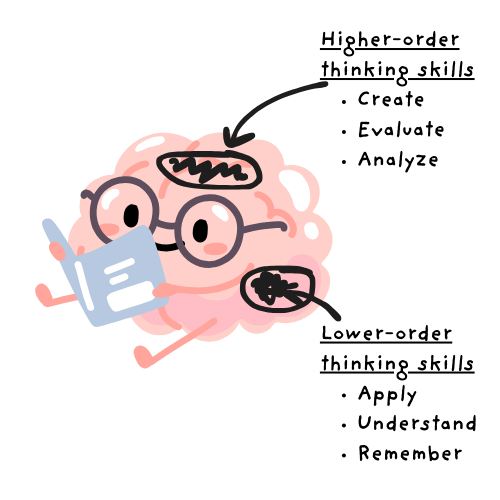
Active Readers apply higher-order thinking skills, connecting the lessons in the book to existing knowledge and apply the lessons throughout their life. Passive Readers use lower-order thinking skills and rarely bring the lessons from the book into their everyday life.
Active readers monitor their comprehension as they’re reading. They quickly realize when something is not understood and have debugging strategies to arrest the issue. Passive Readers carry on through the book and hope something clicks by the end.
Active Readers end up with piles of additional reading on their desk after they finish the book. Passive Readers enjoy themselves.
Active Readers end up with increased levels of executive functioning—improving their working memory and cognitive flexibility after the reading of each book. Passive Readers end up in the same place as where they were before the book.
Active Readers generate their own insights. Passive Readers summarize the author’s thoughts (at best).
I’m not here to tell you life is better as an Active Reader, but if you want to improve your critical thinking and generate your own insights, becoming an Active Reader is a good way to do so.